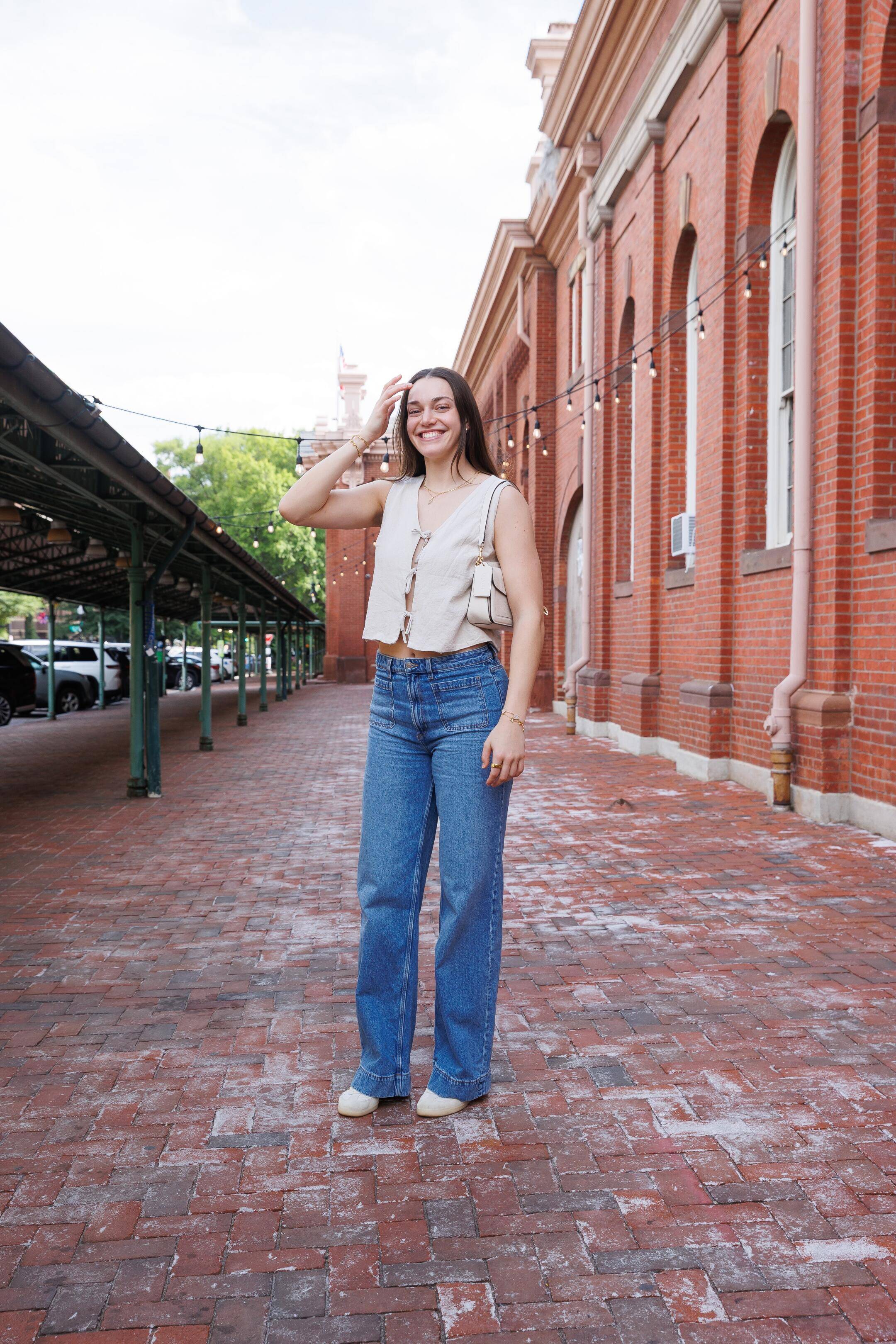
Angela Dugalić on growth, optimism, and defining success beyond the scoreboard
Own Terms

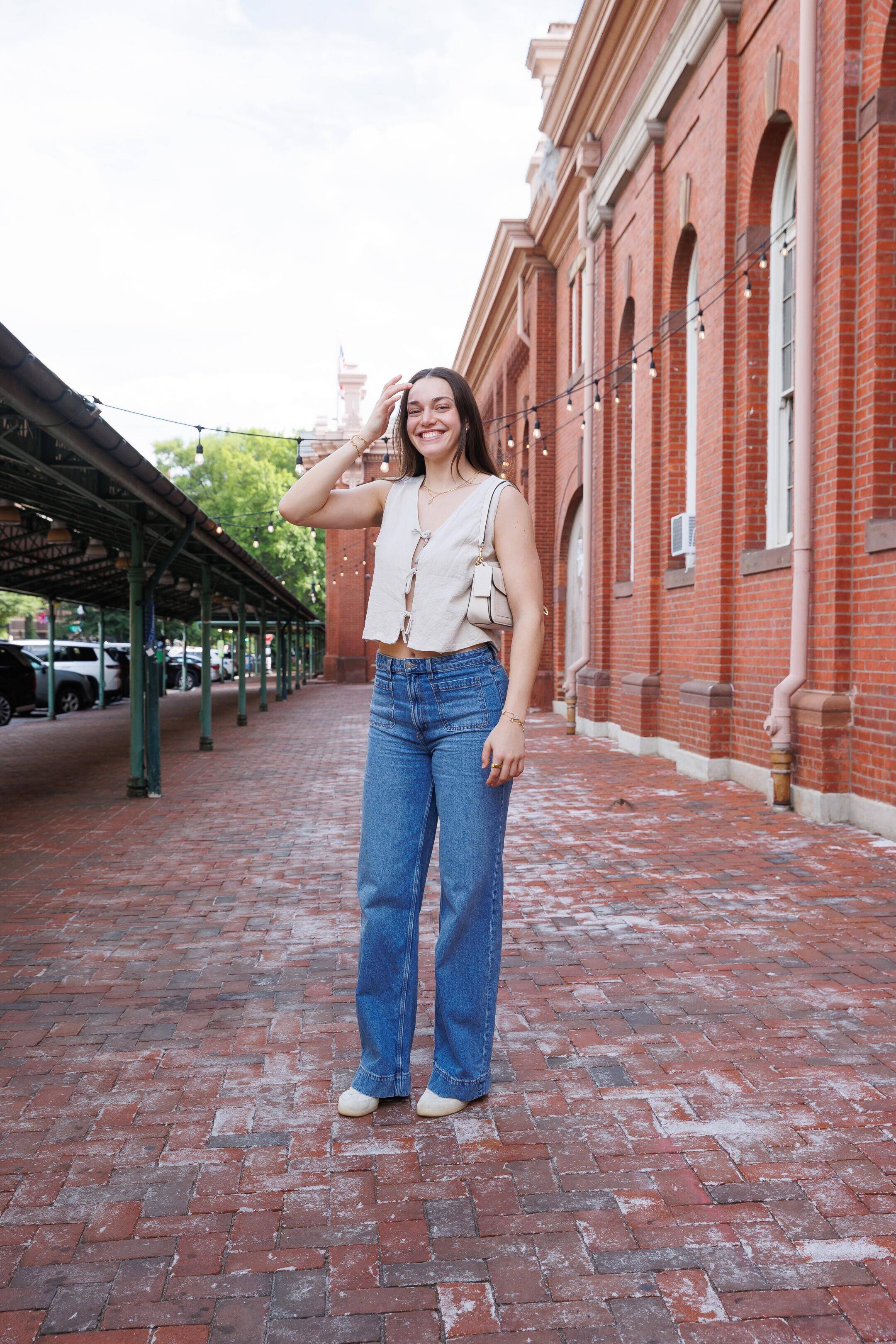


It's a surprisingly ordinary answer from someone whose life has rarely been ordinary.
The ninth overall pick in the 2026 WNBA Draft has spent much of her basketball career competing on some of the sport's biggest stages. She helped UCLA win a national championship. She represented Serbia in international competition, including two Olympic Games. She earned a master's degree while balancing the demands of high-level college basketball. Yet when Dugalić talks about happiness, she rarely talks about accomplishments.
Instead, she talks about perspective. She talks about growth. And she talks about learning to give herself grace.
"If happiness was a teammate, it would remind me to move on to the next play."
Recently, she learned that effort had been recognized in a way she never expected. Her capstone received honors. For someone who openly admits that school was often a challenge growing up, the moment carried extra meaning. "It was really cool," she says.
The accomplishment represented more than an academic distinction. It was proof that growth can happen in places where you once doubted yourself.
Throughout the conversation, Dugalić returns repeatedly to the importance of people. Teammates. Friends. Family. The individuals who help carry you through difficult moments and celebrate the good ones alongside you. She describes herself as deeply team oriented. Someone who enjoys listening more than talking. Someone who naturally looks for ways to support others.
That instinct has influenced the way she thinks about optimism. Part of it comes naturally. Part of it has been intentionally developed over time. Either way, she understands the impact one person can have on a group. “If I'm a good teammate, a good friend, every day we're supposed to bring something," she says. She pauses before explaining it further. "If one day I can't bring one hundred, I need you to bring that extra thirty," she says. "And I can do the same thing for you."
It's a philosophy that feels remarkably aligned with the way she defines happiness. Not as a permanent feeling. Not as the absence of challenges. Not as the result of getting everything right. Instead, happiness is something rooted in perspective. In resilience. In choosing how you respond when things don't go according to plan.
For years, Dugalić admits she struggled with dwelling on mistakes. A bad play could linger in her mind long after it happened. A setback could feel larger than it really was. Over time, she learned a different approach.
When asked what happiness would say if it were her teammate, the answer comes quickly. "Move on to the next play." It's basketball advice. It's life advice. And as Dugalić begins the next chapter of her career, it feels like a fitting mantra.
Not because she has everything figured out but because she understands something many people spend years trying to learn: Growth isn't about getting every moment right, it's about trusting yourself enough to keep moving forward.
In high school, Dugalić was used to being one of the central pieces of every team she played on. Like many elite recruits, she arrived at college after years of being a focal point, someone expected to lead, produce, and make an impact every night. College basketball challenged that identity.
There were injuries. There were setbacks. And there were moments when her role looked very different from what she had imagined. Success became less about recognition and more about impact. Setting a screen. Making the extra pass. Doing whatever the team needed in that moment.
She credits her upbringing and the work ethic instilled by her immigrant parents for helping her navigate those challenges.
"I come from immigrant parents who taught me how to work hard," she says.
The message was simple: nothing worth having comes easily.
That mindset helped her push through injuries, uncertainty, and the natural growing pains that come with moving to a higher level of competition. Instead of focusing on what she wasn't yet, she learned to focus on what she could become.
"Before you improve, you have to fail sometimes to learn how to grow," she says. "To me, that's also success."
It's a definition of success that extends far beyond basketball.
When asked how she measures success in her own life, Dugalić doesn't mention awards or statistics. She talks about progress. She talks about learning. She talks about whether she feels satisfied with the effort she put into something.
One of her favorite examples has nothing to do with basketball at all.
During graduate school, Dugalić completed a capstone project focused on athletic identity and the question of who athletes are outside of their sport. It was a required part of her master's program, but the topic felt personal. After all, she had spent years navigating the same questions herself.
The project demanded significant time and attention during one of the busiest stretches of her life. Finals, postseason basketball, travel, and the pursuit of a national championship were all happening at once. Like many students balancing academics and athletics, there were moments when simply getting the work done felt like an accomplishment. Yet Dugalić still gave the project everything she had.
"Where I'm at today, I'm very content and happy," she says. "I think there's always room to grow and improve. That's my mindset always, even on the basketball court. But in life, in general, I feel like I'm learning as I go. At the same time, I'm giving myself grace or at least trying to."
That balance between ambition and self-compassion has not always come easily.
Like many elite athletes, Dugalić grew up chasing goals. She was energetic, competitive, and constantly in motion. Sports occupied much of her attention, but they weren't her only outlet. She loved drawing and creating art, another way to channel the imagination that still shapes how she sees the world today.
Even now, her optimism often feels rooted in that same creative mindset. The belief that there is always another solution, another possibility, another way forward.
"I've always had these big goals," she says. "I've always been the type of person where if there's a will, there's a way."
That outlook helped her navigate one of the biggest adjustments of her basketball career.
From national championships to international competition, Angela Dugalić has learned that success is about more than outcomes. It's about who you become along the way.
If Angela Dugalić could design the perfect day, it would start slowly. No alarm. No rushing. Just waking up naturally, making coffee, and easing into the morning.
From there, the day unfolds with the people she cares about. A trip to get her nails done. Brunch with friends. Something savory for everyone at the table, followed by one dessert shared among the group. A walk through the city. A few shops. A café where nobody feels pressured to leave. By the end of the night, she's back home watching The Office.
Angela Dugalić on growth, optimism, and defining success beyond the scoreboard
Own Terms
"Where I'm at today, I'm very content and happy," she says. "I think there's always room to grow and improve. That's my mindset always, even on the basketball court. But in life, in general, I feel like I'm learning as I go. At the same time, I'm giving myself grace or at least trying to."
That balance between ambition and self-compassion has not always come easily.
Like many elite athletes, Dugalić grew up chasing goals. She was energetic, competitive, and constantly in motion. Sports occupied much of her attention, but they weren't her only outlet. She loved drawing and creating art, another way to channel the imagination that still shapes how she sees the world today.
Even now, her optimism often feels rooted in that same creative mindset. The belief that there is always another solution, another possibility, another way forward.
"I've always had these big goals," she says. "I've always been the type of person where if there's a will, there's a way."
That outlook helped her navigate one of the biggest adjustments of her basketball career.
In high school, Dugalić was used to being one of the central pieces of every team she played on. Like many elite recruits, she arrived at college after years of being a focal point, someone expected to lead, produce, and make an impact every night. College basketball challenged that identity.
There were injuries. There were setbacks. And there were moments when her role looked very different from what she had imagined. Success became less about recognition and more about impact. Setting a screen. Making the extra pass. Doing whatever the team needed in that moment.
She credits her upbringing and the work ethic instilled by her immigrant parents for helping her navigate those challenges.
"I come from immigrant parents who taught me how to work hard," she says.
The message was simple: nothing worth having comes easily.
That mindset helped her push through injuries, uncertainty, and the natural growing pains that come with moving to a higher level of competition. Instead of focusing on what she wasn't yet, she learned to focus on what she could become.
"Before you improve, you have to fail sometimes to learn how to grow," she says. "To me, that's also success."
It's a definition of success that extends far beyond basketball.
When asked how she measures success in her own life, Dugalić doesn't mention awards or statistics. She talks about progress. She talks about learning. She talks about whether she feels satisfied with the effort she put into something.
One of her favorite examples has nothing to do with basketball at all.
During graduate school, Dugalić completed a capstone project focused on athletic identity and the question of who athletes are outside of their sport. It was a required part of her master's program, but the topic felt personal. After all, she had spent years navigating the same questions herself.
The project demanded significant time and attention during one of the busiest stretches of her life. Finals, postseason basketball, travel, and the pursuit of a national championship were all happening at once. Like many students balancing academics and athletics, there were moments when simply getting the work done felt like an accomplishment. Yet Dugalić still gave the project everything she had.
Recently, she learned that effort had been recognized in a way she never expected. Her capstone received honors. For someone who openly admits that school was often a challenge growing up, the moment carried extra meaning. "It was really cool," she says.
The accomplishment represented more than an academic distinction. It was proof that growth can happen in places where you once doubted yourself.
Throughout the conversation, Dugalić returns repeatedly to the importance of people. Teammates. Friends. Family. The individuals who help carry you through difficult moments and celebrate the good ones alongside you. She describes herself as deeply team oriented. Someone who enjoys listening more than talking. Someone who naturally looks for ways to support others.
That instinct has influenced the way she thinks about optimism. Part of it comes naturally. Part of it has been intentionally developed over time. Either way, she understands the impact one person can have on a group. “If I'm a good teammate, a good friend, every day we're supposed to bring something," she says. She pauses before explaining it further. "If one day I can't bring one hundred, I need you to bring that extra thirty," she says. "And I can do the same thing for you."
It's a philosophy that feels remarkably aligned with the way she defines happiness. Not as a permanent feeling. Not as the absence of challenges. Not as the result of getting everything right. Instead, happiness is something rooted in perspective. In resilience. In choosing how you respond when things don't go according to plan.
For years, Dugalić admits she struggled with dwelling on mistakes. A bad play could linger in her mind long after it happened. A setback could feel larger than it really was. Over time, she learned a different approach.
When asked what happiness would say if it were her teammate, the answer comes quickly. "Move on to the next play." It's basketball advice. It's life advice. And as Dugalić begins the next chapter of her career, it feels like a fitting mantra.
Not because she has everything figured out but because she understands something many people spend years trying to learn: Growth isn't about getting every moment right, it's about trusting yourself enough to keep moving forward.
"If happiness was a teammate, it would remind me to move on to the next play."
From national championships to international competition, Angela Dugalić has learned that success is about more than outcomes. It's about who you become along the way.
If Angela Dugalić could design the perfect day, it would start slowly. No alarm. No rushing. Just waking up naturally, making coffee, and easing into the morning.
From there, the day unfolds with the people she cares about. A trip to get her nails done. Brunch with friends. Something savory for everyone at the table, followed by one dessert shared among the group. A walk through the city. A few shops. A café where nobody feels pressured to leave. By the end of the night, she's back home watching The Office.

It's a surprisingly ordinary answer from someone whose life has rarely been ordinary.
The ninth overall pick in the 2026 WNBA Draft has spent much of her basketball career competing on some of the sport's biggest stages. She helped UCLA win a national championship. She represented Serbia in international competition, including two Olympic Games. She earned a master's degree while balancing the demands of high-level college basketball. Yet when Dugalić talks about happiness, she rarely talks about accomplishments.
Instead, she talks about perspective. She talks about growth. And she talks about learning to give herself grace.