Before there was a uniform, there was a question. How do you honor the people who stayed? Not the ones whose names appear in history books. Not the ones who passed through for a moment and moved on. The people who remained. The people who kept showing up when it would have been easier not to.
The women who inspired the Washington Mystics 2026 Rebel Edition Uniform
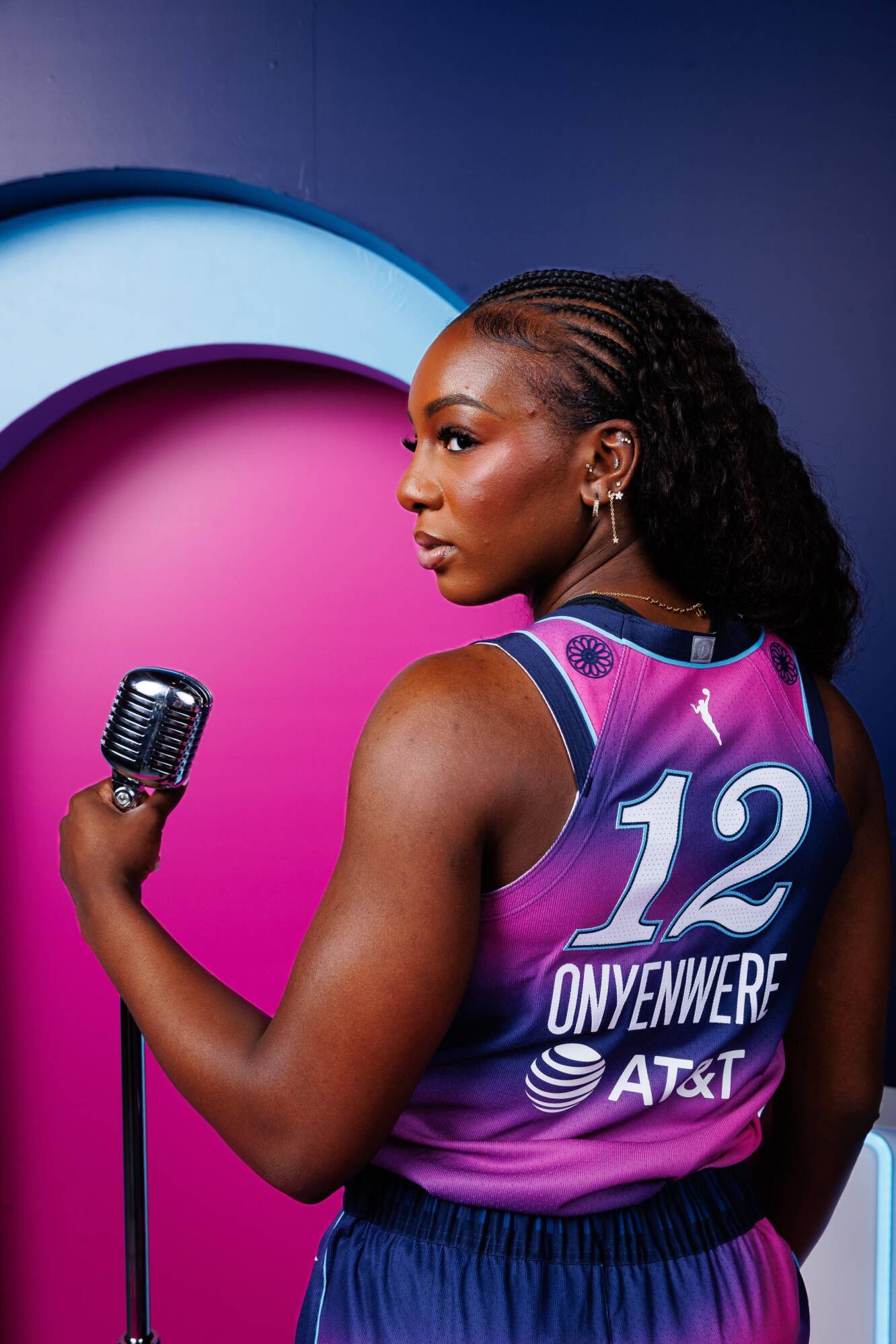
Our 2026 Rebel Edition Uniform honors that legacy. Among them is Virginia Ali.
And it's built by those who stay long enough to help others find their rhythm, too.
But some women stayed.
They kept showing up in the same places. They kept building. They kept creating. They kept believing in a neighborhood that still had stories left to tell.
In music, there is a concept known as the pocket.
It is the moment when rhythm settles into place so naturally that everyone moves together. Nothing forced. Nothing rushed. Just trust, timing, and collective energy.
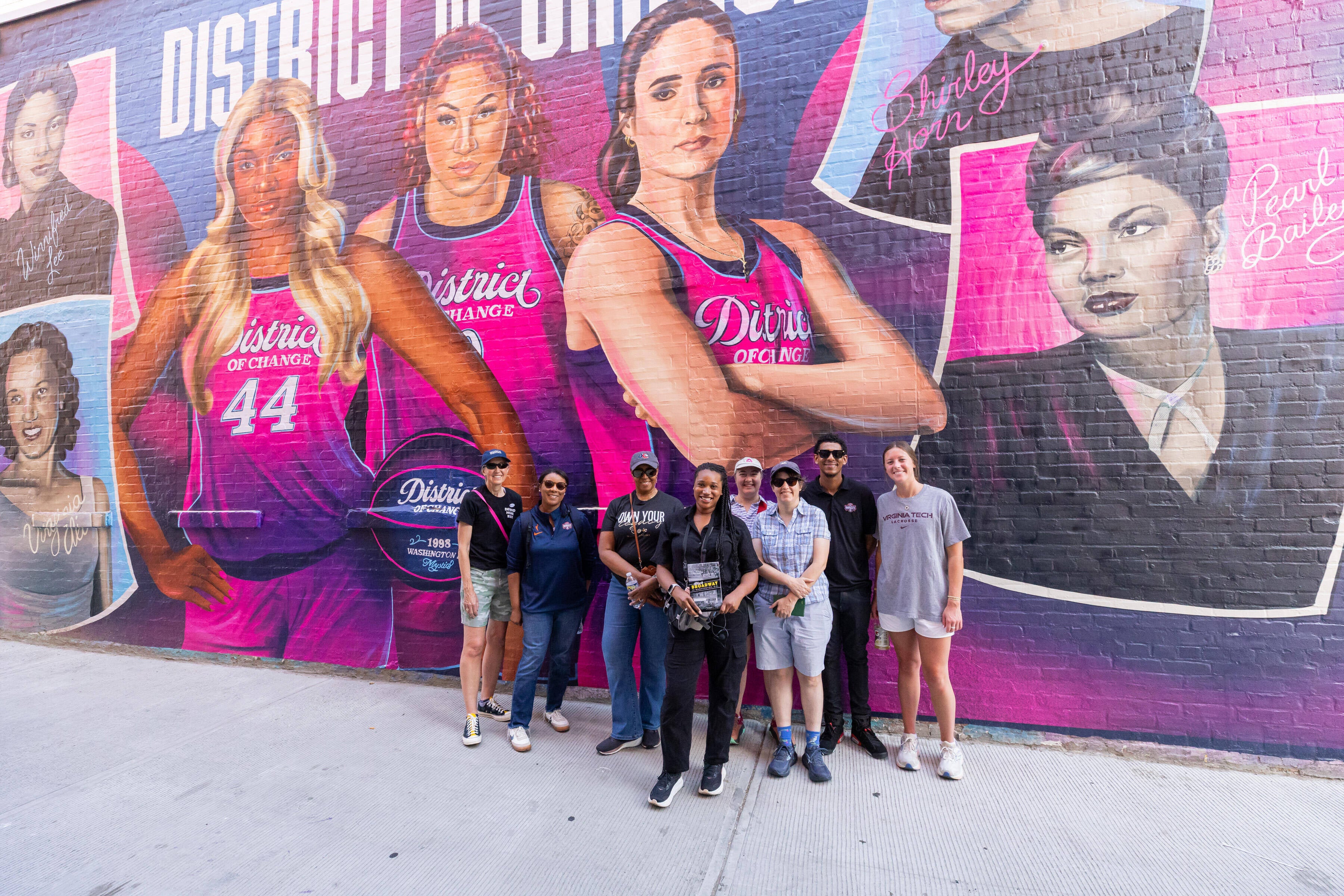
U Street found its pocket because people like Virginia Ali, Winnifred Lee, Pearl Bailey, and Shirley Horn kept showing up.
They held the note.
They protected the rhythm.
They created something larger than themselves.
Our 2026 Rebel Edition Uniform honors that legacy.
Together, these women represent different chapters of the same story. Entrepreneurs. Artists. Builders. Leaders. Women who understood that communities do not sustain themselves. People sustain them.
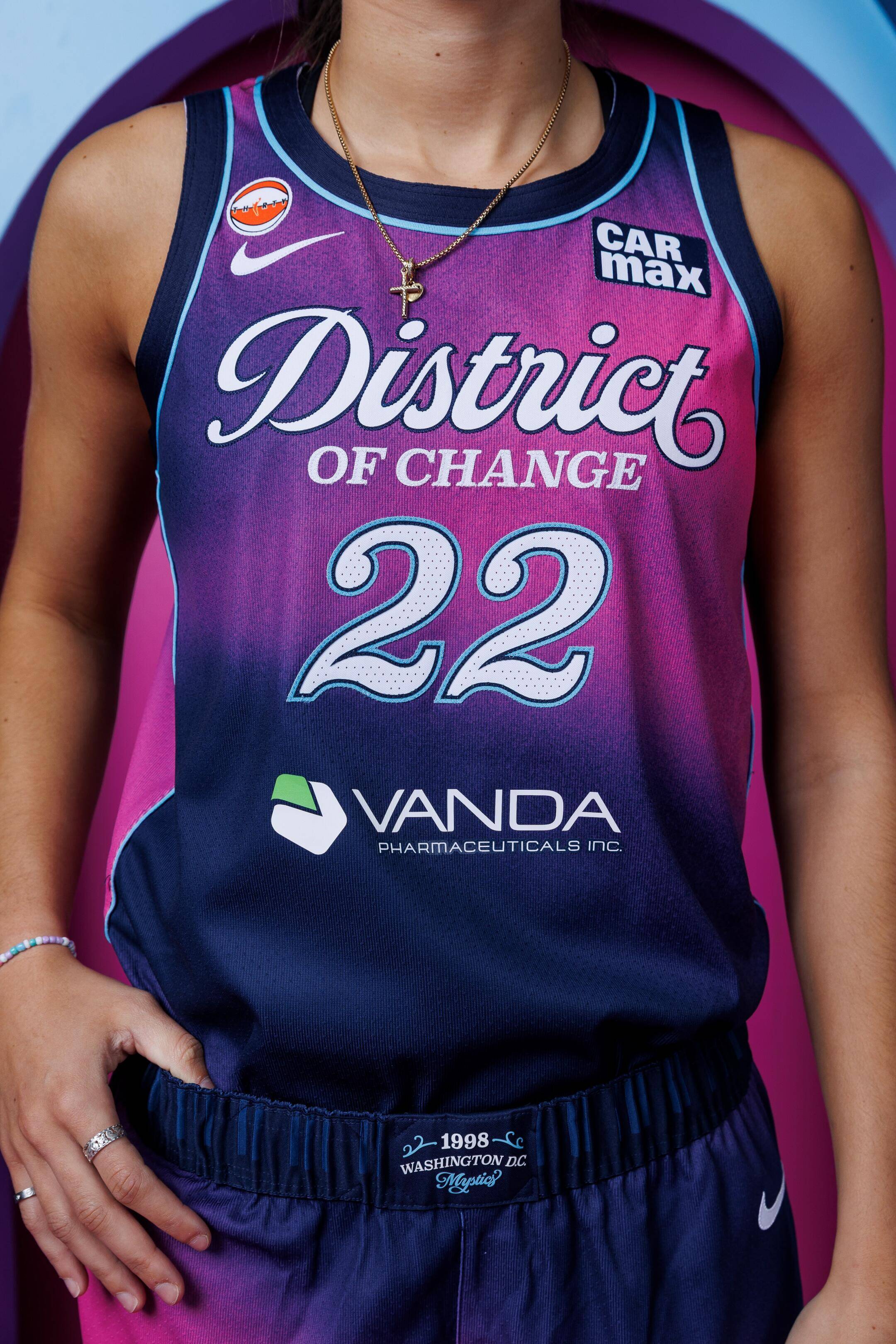
Their influence inspired every element of our 2026 Rebel Edition Uniform.
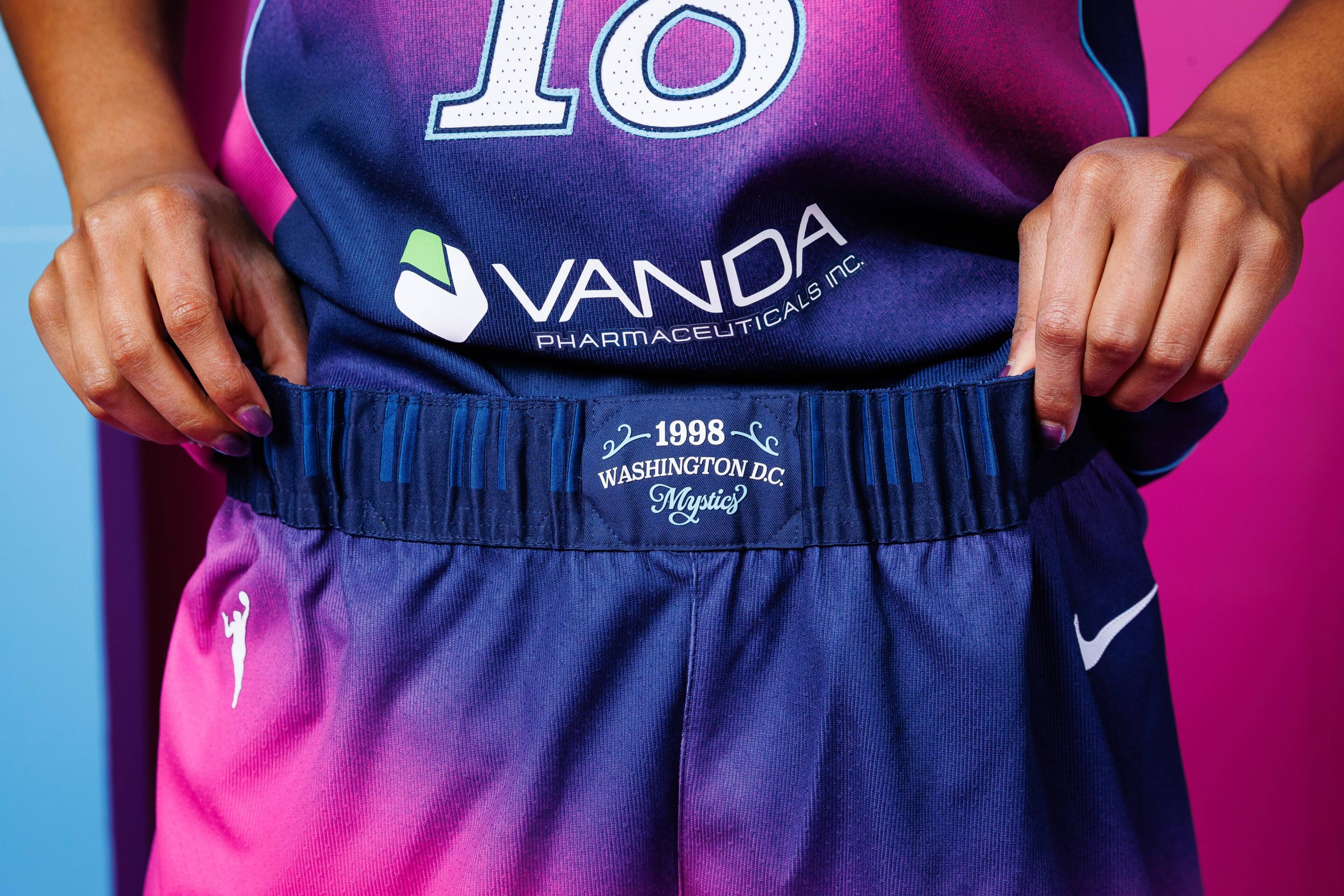
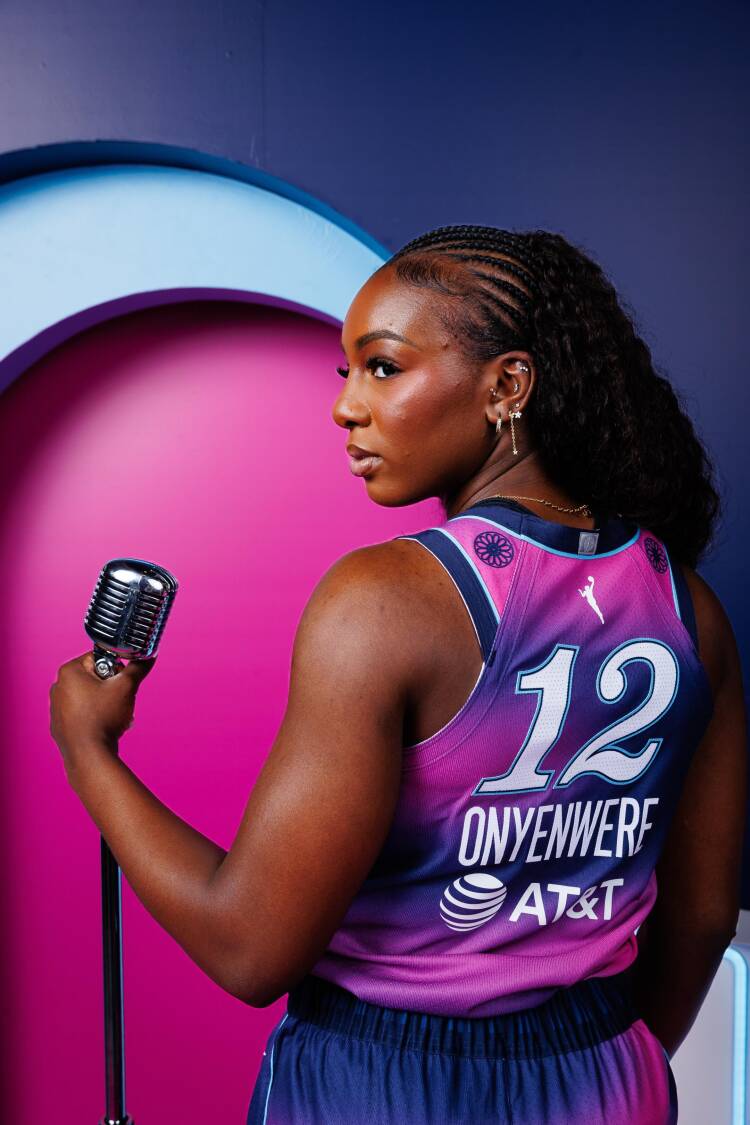
The piano keys woven into the waistband recall the music that once filled U Street's clubs and theaters. Architectural details reference the buildings that still define the corridor today. The gradient blending Mystics navy into Laser Fuchsia reflects a city constantly evolving while remaining connected to its roots.
Every detail tells a story. But the most important story is not about a uniform.
It's about what happens when people refuse to leave something they love behind.
U Street was one of the most culturally vibrant corridors in America. Then 1968 changed everything. Businesses closed. Residents moved away. Many artists followed opportunities elsewhere.
At first, it sounds like a comparison between Washington and Los Angeles. But for Thomas, the meaning runs deeper.
Washington, D.C., was designed in the shape of a diamond. The city itself reflects a spirit of connection, bringing together land from Maryland and Virginia and shaped by the contributions of people from different backgrounds.
For Thomas, the metaphor feels fitting for U Street.
Diamonds are formed under pressure. They endure. They shine.
The story of Black Broadway is filled with people who did the same.
Women like Virginia Ali, Winnifred Lee, Pearl Bailey, and Shirley Horn helped build a neighborhood that became one of the country's most important centers of Black culture, business, and creativity. Through periods of prosperity and periods of uncertainty, they continued to show up, creating opportunities not only for themselves, but for the generations that followed.
During the tour, one comment from Thomas lingered long after the walk was over.
Today, three generations of Lee women have helped carry that legacy forward, demonstrating that community impact is often measured not only by what you build, but by what continues long after you're gone.
Then there was Pearl Bailey. A singer, actress, and entertainer whose career took her from Washington to stages around the world, Bailey never forgot where she came from. In fact, she is widely credited with popularizing the phrase "Black Broadway" to describe the cultural significance of U Street.
Her performances at venues like the Howard Theatre helped define an era when the corridor stood among the country's most important centers of Black art and culture.
And there was Shirley Horn. A Grammy Award-winning vocalist and pianist born and raised in Washington, Horn became one of the most respected jazz artists of her generation. Her connection to U Street runs deep. The clubs and stages of Black Broadway helped shape her career, and in return she became one of the artists who carried the neighborhood's creative spirit far beyond city limits.
Since opening Ben's Chili Bowl alongside her husband Ben in 1958, she has become one of the most beloved figures in Washington. Through moments of celebration and moments of hardship, she remained committed to the community around her. Her leadership helped transform Ben's into a place where the city could come together, regardless of circumstance.
Today, she remains a symbol of resilience and service, earning the affectionate title of the "Matriarch of D.C."
This story is woven directly into our 2026 Rebel Edition Uniform. The jersey's wordmark draws inspiration from the iconic signage of Ben's Chili Bowl, while touches of Laser Fuchsia nod to the vibrancy, sophistication, and staying power that Ali brought to U Street for generations. It's one of several ways the uniform honors women whose impact can still be felt throughout the corridor today.
The story continues with Winnifred Lee. As co-founder of Lee's Flower Shop, Lee helped establish what would become the oldest Black-owned flower shop in Washington, D.C. Flowers mark life's most important moments. Celebrations. Milestones. Remembrances. For decades, Lee's Flower Shop has been part of those moments for families across the city.
Those family stories sparked an interest that would eventually grow into years of research. Thomas collected photographs from archives, libraries, longtime residents, Howard University, and local business owners. Then she brought those images back into the community, placing them in front of the people who remembered them best.
"I would ask them, 'Tell me about this place. Tell me about this performer," she says. "And they would just light up. "The reaction reinforced something she believes is essential to preserving history. "I think it's important that when you're telling history, you tell it through the lens of who was there."
One image has stayed with her throughout the process.
The photograph shows a gathering at the historic True Reformers Building, one of the landmarks that helped establish U Street as a center of Black culture, business, and entertainment. What stands out isn't a famous performer or headline-making moment.
It's the joy. "The ladies are dressed up very nicely," Thomas says. "It's this whole social club atmosphere." Growing up, many of the images she encountered of Black history focused on hardship. This photograph told a different story. "There was joy. There was happiness. There was freedom."
That distinction matters.
While Thomas believes it is important to acknowledge the challenges U Street endured, she also believes the story of Black Broadway deserves to be told through the lens of achievement, creativity, and possibility.
"I want people to be inspired," she says. "I want them to see the joy, the positivity, the victories, the accomplishments, the resilience."
That spirit can be found throughout the women honored by our 2026 Rebel Edition Uniform.
The answer led us to U Street.
Long before it became one of Washington's most recognizable corridors, U Street was the cultural heartbeat of Black Washington. During the first half of the twentieth century, the neighborhood pulsed with possibility. Jazz clubs spilled music onto sidewalks. Theaters drew crowds from across the city. Restaurants, businesses, and community organizations created a thriving ecosystem of Black excellence.
The neighborhood became known as Black Broadway.
It was electric. Sophisticated. Entirely its own.
Women were central to that story.
Not always the loudest voices. Not always the most visible. But often the people doing the work that allowed communities to thrive.
Then came 1968. Following the assassination of Dr. Martin Luther King Jr., unrest swept through Washington. Businesses closed. Buildings were damaged. Residents left. The corridor that had once been one of the country's most vibrant cultural destinations faced an uncertain future.
But not everyone left. Some stayed. Some rebuilt. Some kept showing up day after day, year after year, refusing to let the neighborhood lose its identity.
Our 2026 Nike Rebel Edition Uniform is dedicated to those women and the legacy they created. As we developed the 2026 Rebel Edition Uniform, we weren't simply looking for a place in D.C.'s history. We were looking for a story that still lives in the city today.
Few people understand that story better than Briana Thomas.
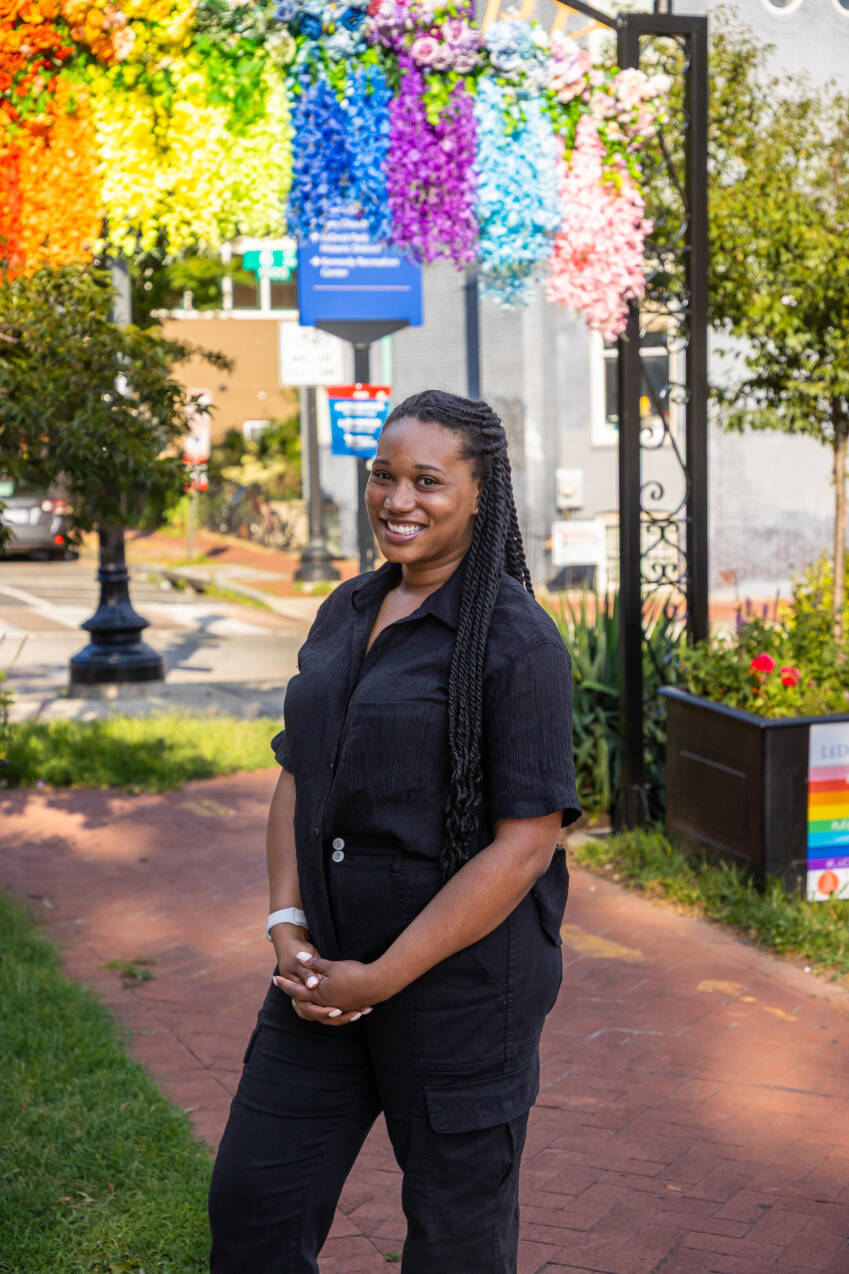
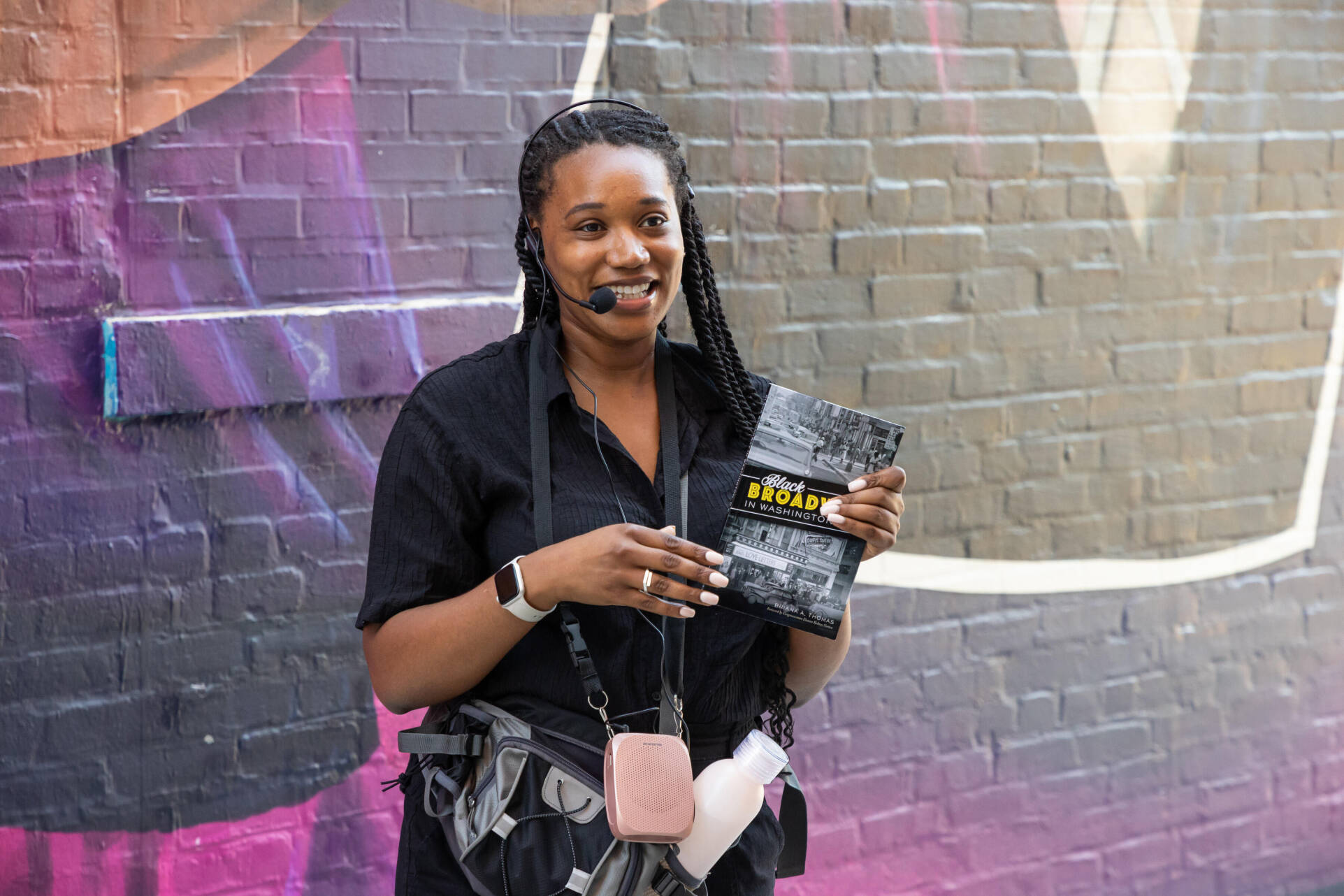
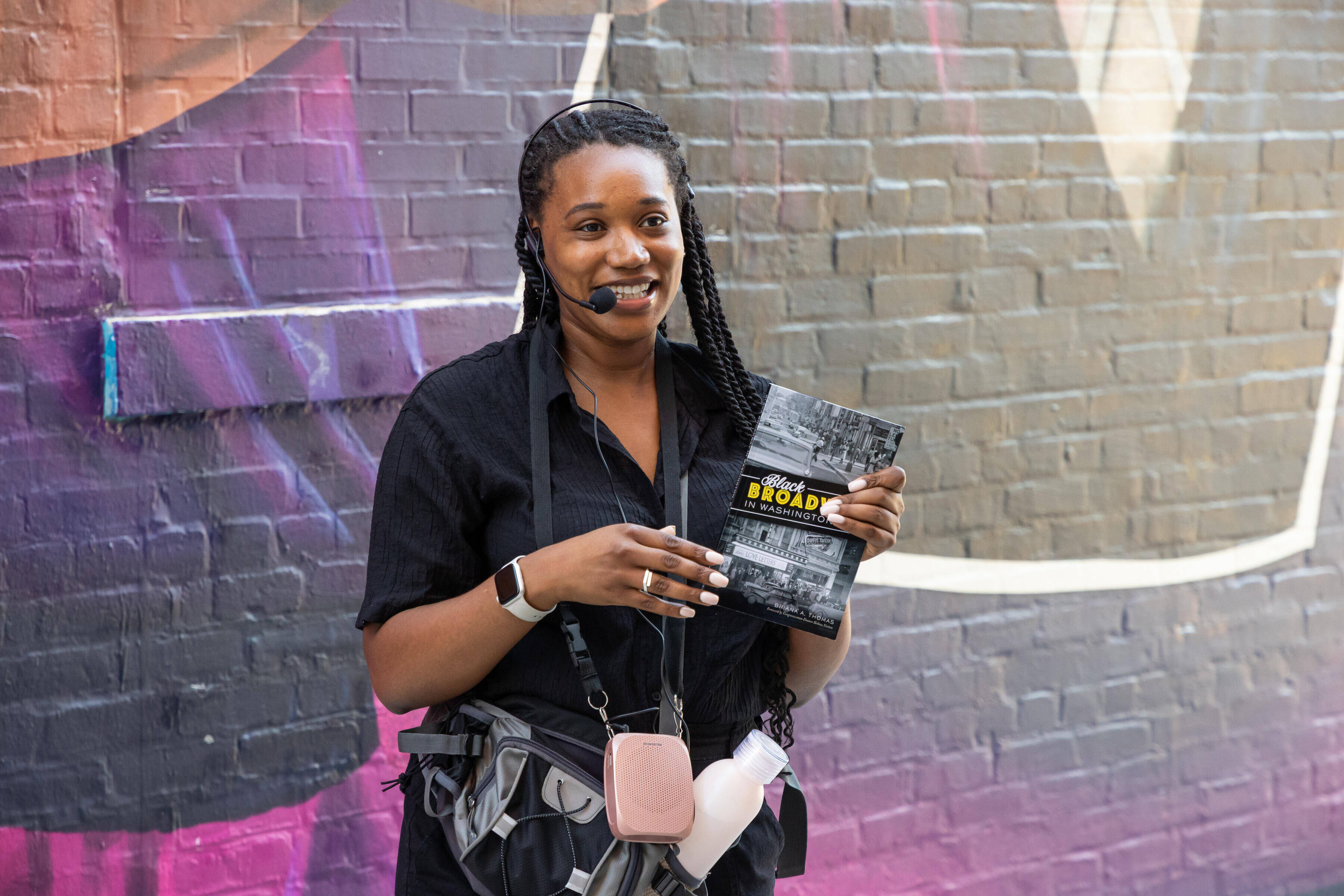
A journalist, author, historian, and tour guide, Thomas has spent years documenting the history of U Street and Black Broadway. Recently, she led a walking tour of the neighborhood, guiding visitors through the same streets where musicians, entrepreneurs, activists, and community leaders helped shape one of the most influential cultural corridors in America.
For Thomas, the work began with a desire to preserve stories that were at risk of being forgotten. "I wrote a magazine article about ten years ago to uncover the forgotten history of U Street," she says. "There was so much changing because of gentrification, and I wanted to highlight that history."
What started as an article eventually became a book, but the research began somewhere much closer to home. Her grandmother. "My grandmother used to party on Black Broadway," Thomas says. "She spent a lot of time here on U Street."
The women who inspired the Washington Mystics 2026 Rebel Edition Uniform
Today, three generations of Lee women have helped carry that legacy forward, demonstrating that community impact is often measured not only by what you build, but by what continues long after you're gone.
Then there was Pearl Bailey. A singer, actress, and entertainer whose career took her from Washington to stages around the world, Bailey never forgot where she came from. In fact, she is widely credited with popularizing the phrase "Black Broadway" to describe the cultural significance of U Street.
Her performances at venues like the Howard Theatre helped define an era when the corridor stood among the country's most important centers of Black art and culture.
And there was Shirley Horn. A Grammy Award-winning vocalist and pianist born and raised in Washington, Horn became one of the most respected jazz artists of her generation. Her connection to U Street runs deep. The clubs and stages of Black Broadway helped shape her career, and in return she became one of the artists who carried the neighborhood's creative spirit far beyond city limits.
But some women stayed.
They kept showing up in the same places. They kept building. They kept creating. They kept believing in a neighborhood that still had stories left to tell.
In music, there is a concept known as the pocket.
It is the moment when rhythm settles into place so naturally that everyone moves together. Nothing forced. Nothing rushed. Just trust, timing, and collective energy.
U Street found its pocket because people like Virginia Ali, Winnifred Lee, Pearl Bailey, and Shirley Horn kept showing up.
They held the note.
They protected the rhythm.
They created something larger than themselves.
Our 2026 Rebel Edition Uniform honors that legacy.
Together, these women represent different chapters of the same story. Entrepreneurs. Artists. Builders. Leaders. Women who understood that communities do not sustain themselves. People sustain them.
Their influence inspired every element of our 2026 Rebel Edition Uniform.
The piano keys woven into the waistband recall the music that once filled U Street's clubs and theaters. Architectural details reference the buildings that still define the corridor today. The gradient blending Mystics navy into Laser Fuchsia reflects a city constantly evolving while remaining connected to its roots.
Every detail tells a story. But the most important story is not about a uniform.
It's about what happens when people refuse to leave something they love behind.
U Street was one of the most culturally vibrant corridors in America. Then 1968 changed everything. Businesses closed. Residents moved away. Many artists followed opportunities elsewhere.
At first, it sounds like a comparison between Washington and Los Angeles. But for Thomas, the meaning runs deeper.
Washington, D.C., was designed in the shape of a diamond. The city itself reflects a spirit of connection, bringing together land from Maryland and Virginia and shaped by the contributions of people from different backgrounds.
For Thomas, the metaphor feels fitting for U Street.
Diamonds are formed under pressure. They endure. They shine.
The story of Black Broadway is filled with people who did the same.
Women like Virginia Ali, Winnifred Lee, Pearl Bailey, and Shirley Horn helped build a neighborhood that became one of the country's most important centers of Black culture, business, and creativity. Through periods of prosperity and periods of uncertainty, they continued to show up, creating opportunities not only for themselves, but for the generations that followed.
Our 2026 Rebel Edition Uniform honors that legacy. Among them is Virginia Ali.
During the tour, one comment from Thomas lingered long after the walk was over.
And it's built by those who stay long enough to help others find their rhythm, too.
Those family stories sparked an interest that would eventually grow into years of research. Thomas collected photographs from archives, libraries, longtime residents, Howard University, and local business owners. Then she brought those images back into the community, placing them in front of the people who remembered them best.
"I would ask them, 'Tell me about this place. Tell me about this performer," she says. "And they would just light up. "The reaction reinforced something she believes is essential to preserving history. "I think it's important that when you're telling history, you tell it through the lens of who was there."
One image has stayed with her throughout the process.
The photograph shows a gathering at the historic True Reformers Building, one of the landmarks that helped establish U Street as a center of Black culture, business, and entertainment. What stands out isn't a famous performer or headline-making moment.
It's the joy. "The ladies are dressed up very nicely," Thomas says. "It's this whole social club atmosphere." Growing up, many of the images she encountered of Black history focused on hardship. This photograph told a different story. "There was joy. There was happiness. There was freedom."
That distinction matters.
While Thomas believes it is important to acknowledge the challenges U Street endured, she also believes the story of Black Broadway deserves to be told through the lens of achievement, creativity, and possibility.
"I want people to be inspired," she says. "I want them to see the joy, the positivity, the victories, the accomplishments, the resilience."
That spirit can be found throughout the women honored by our 2026 Rebel Edition Uniform.
The answer led us to U Street.
Long before it became one of Washington's most recognizable corridors, U Street was the cultural heartbeat of Black Washington. During the first half of the twentieth century, the neighborhood pulsed with possibility. Jazz clubs spilled music onto sidewalks. Theaters drew crowds from across the city. Restaurants, businesses, and community organizations created a thriving ecosystem of Black excellence.
The neighborhood became known as Black Broadway.
It was electric. Sophisticated. Entirely its own.
Women were central to that story.
Not always the loudest voices. Not always the most visible. But often the people doing the work that allowed communities to thrive.
Then came 1968. Following the assassination of Dr. Martin Luther King Jr., unrest swept through Washington. Businesses closed. Buildings were damaged. Residents left. The corridor that had once been one of the country's most vibrant cultural destinations faced an uncertain future.
But not everyone left. Some stayed. Some rebuilt. Some kept showing up day after day, year after year, refusing to let the neighborhood lose its identity.
Our 2026 Nike Rebel Edition Uniform is dedicated to those women and the legacy they created. As we developed the 2026 Rebel Edition Uniform, we weren't simply looking for a place in D.C.'s history. We were looking for a story that still lives in the city today.
Few people understand that story better than Briana Thomas.
A journalist, author, historian, and tour guide, Thomas has spent years documenting the history of U Street and Black Broadway. Recently, she led a walking tour of the neighborhood, guiding visitors through the same streets where musicians, entrepreneurs, activists, and community leaders helped shape one of the most influential cultural corridors in America.
For Thomas, the work began with a desire to preserve stories that were at risk of being forgotten. "I wrote a magazine article about ten years ago to uncover the forgotten history of U Street," she says. "There was so much changing because of gentrification, and I wanted to highlight that history."
What started as an article eventually became a book, but the research began somewhere much closer to home. Her grandmother. "My grandmother used to party on Black Broadway," Thomas says. "She spent a lot of time here on U Street."
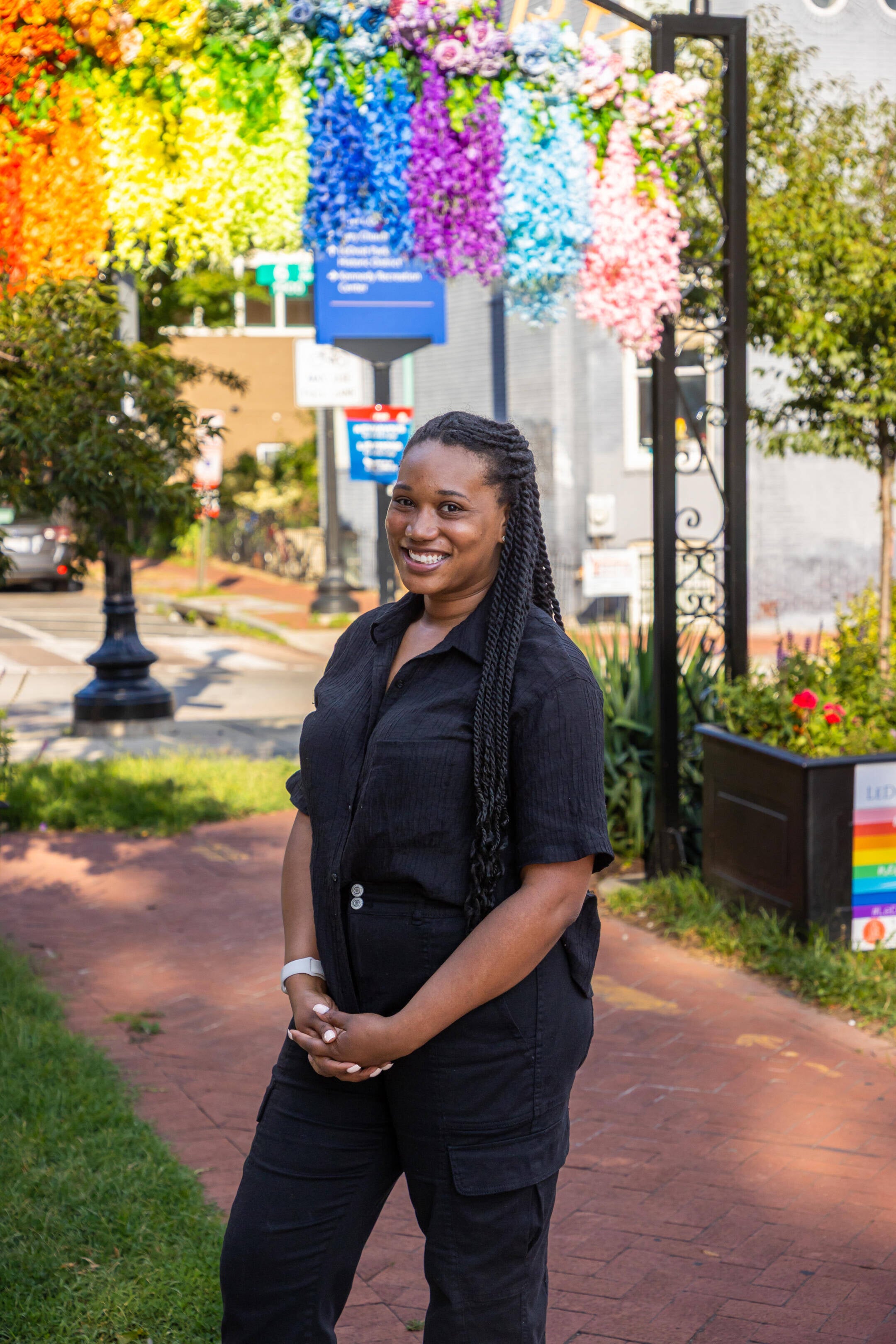
Since opening Ben's Chili Bowl alongside her husband Ben in 1958, she has become one of the most beloved figures in Washington. Through moments of celebration and moments of hardship, she remained committed to the community around her. Her leadership helped transform Ben's into a place where the city could come together, regardless of circumstance.
Today, she remains a symbol of resilience and service, earning the affectionate title of the "Matriarch of D.C."
This story is woven directly into our 2026 Rebel Edition Uniform. The jersey's wordmark draws inspiration from the iconic signage of Ben's Chili Bowl, while touches of Laser Fuchsia nod to the vibrancy, sophistication, and staying power that Ali brought to U Street for generations. It's one of several ways the uniform honors women whose impact can still be felt throughout the corridor today.
The story continues with Winnifred Lee. As co-founder of Lee's Flower Shop, Lee helped establish what would become the oldest Black-owned flower shop in Washington, D.C. Flowers mark life's most important moments. Celebrations. Milestones. Remembrances. For decades, Lee's Flower Shop has been part of those moments for families across the city.