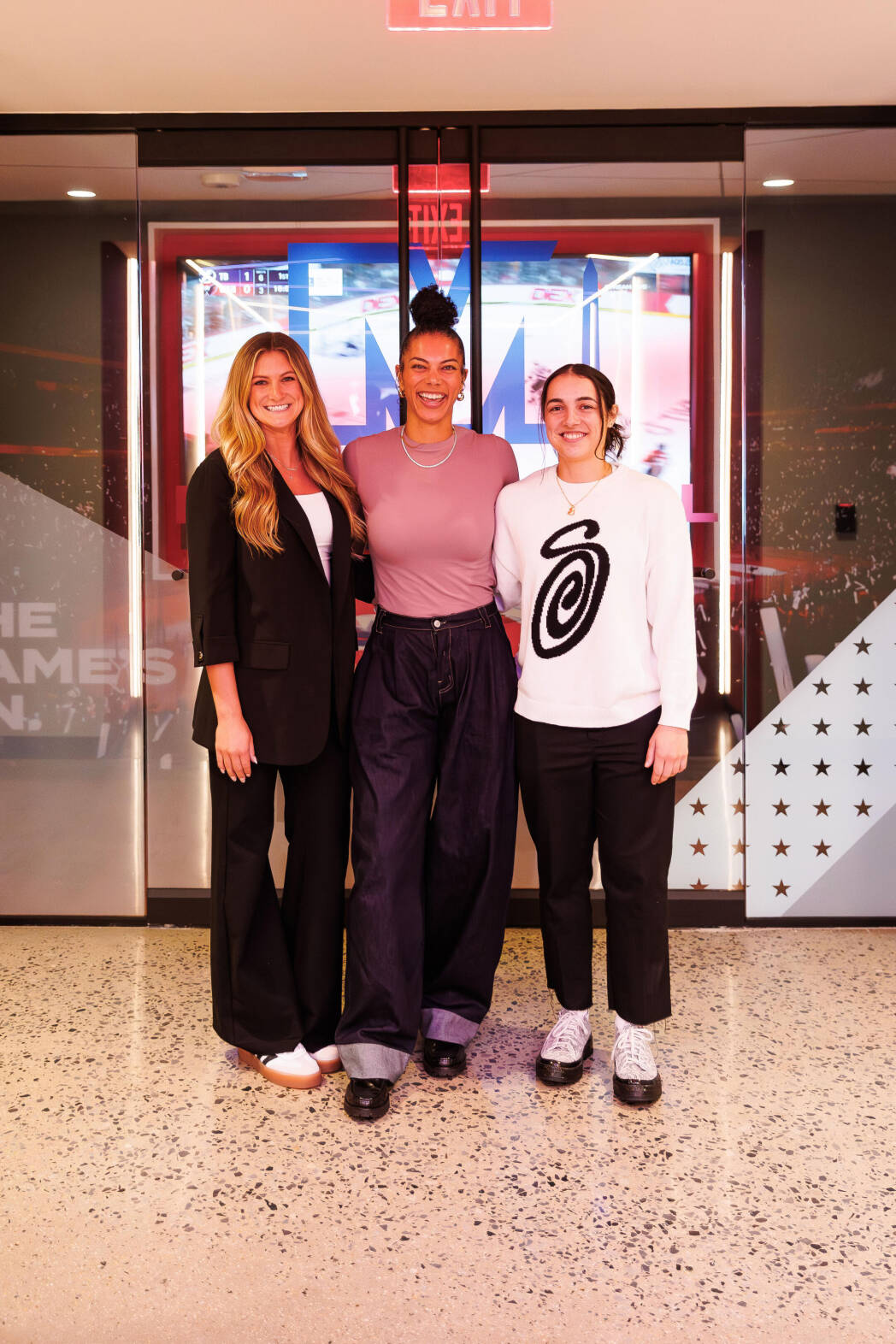
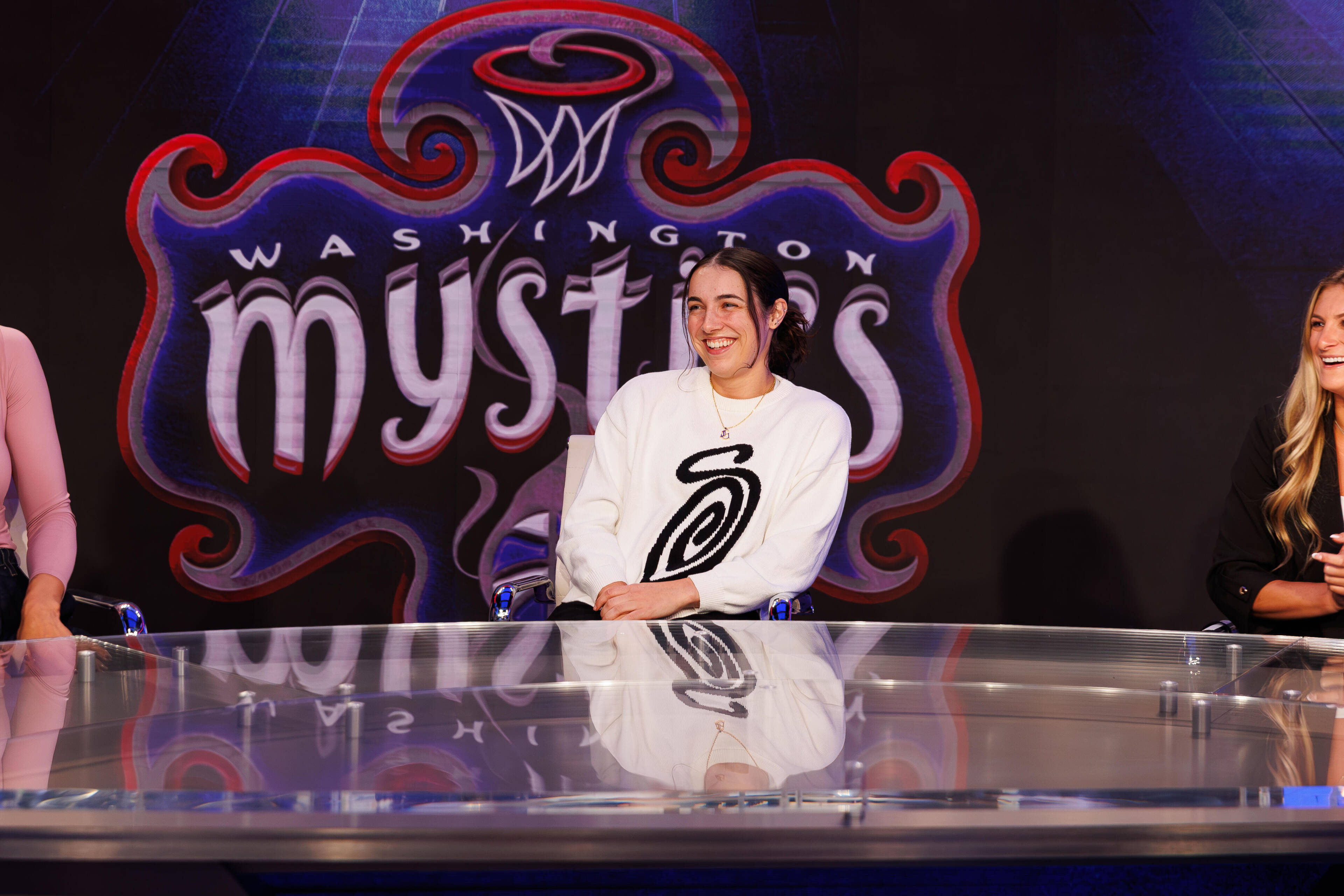
Jacy Sheldon, Alysha Clark and Georgia Amoore
HOW TO THINK LIKE AN ANALYST
THE VIEW FROM HERE

The Narrative Shift
Seeing From the Sidelines
The Underdog’s Analysis
From late nights in the film room to the pause of an injured rookie season, Amoore’s way of seeing the game has only expanded. Whether she’s helping teammates read plays or picturing herself as a coach one day, her approach is anchored by the insight within the details.
Amoore’s analytical eye isn’t just an advantage—it’s her signature, and a reminder that you don’t have to be the tallest player on the floor to see the game best.
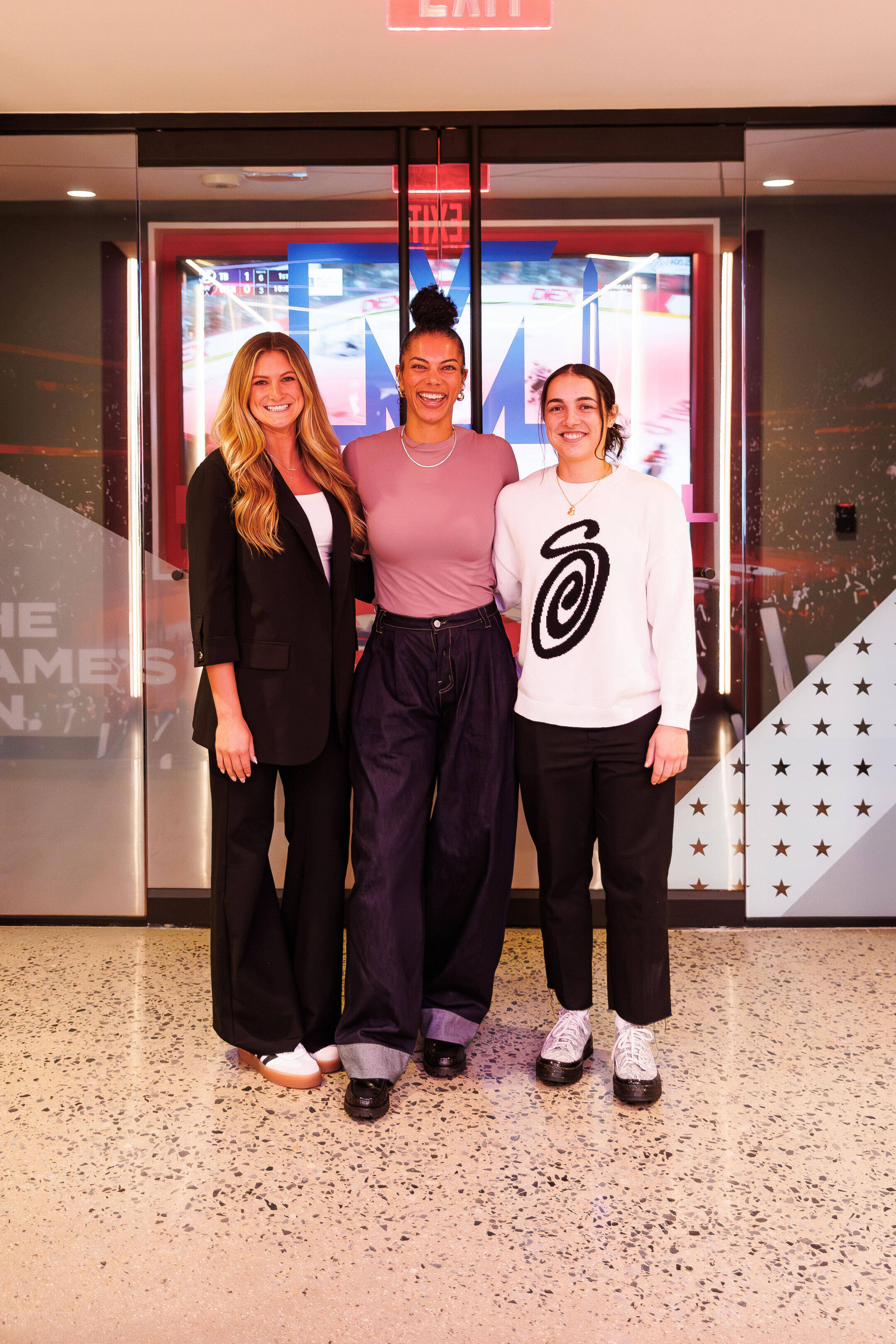
Recently, Amoore got the opportunity to tour the Monumental Sports Network production studio. She thought she knew what to expect: bright lights and polished broadcasts. What she found instead was a room buzzing with activity, synced and flowing in a way that reminded her of a well-run offense.
“I was really blown away by the production — the sound, the communication, how overwhelming it all is,” she says. “It really shows that, especially being an athlete, you know how good teamwork is, but until you’re in these moments when it’s live, you have no idea how many people are working together to make it all happen.”
The choreography of live production amazed her, but what stayed with her was its purpose in bringing the full picture of women’s basketball to the masses.
“You can tell a story through stats but that's never the full story,” she says. “For me, the most exciting part is the imagination and thinking about concepts of the game.”
Top-tier analysis, she believes, is equal parts intellect and empathy: helping people see the why behind every stat line and the story behind every player. A shooting slump might hide the exhaustion of a cross-country road trip. A missed rotation might follow a sleepless night.
“It’s so easy to be critical without knowing what’s really going on,” she says. “I think that kind of gets forgotten in women's sports and in any other sport. At the end of the day, we’re not robots.”
As women’s sports continues to grow, the voices shaping the stories matter more than ever.
“You’re seeing more networks pick up women’s basketball now,” Amoore says. “That’s good for the athletes and for the game, but it’s also creating more opportunities for people in broadcasting and media. It’s opening doors for everyone.”
She’s started visualizing herself in that space — maybe one day behind a broadcast desk, in a control room or even on social media. She talks about analysts like, Tamika Catchings and Ari Chambers, women who use their platforms to educate, connect, and expand the game’s reach.
“It’s such a skill to be able to communicate to a large number of people, all with different knowledge and biases,” she says.
For Amoore, it’s a natural blend of analysis and love for the game that’s only deepened during her time on the sideline.
Start wide, then get narrow
“Have a passion for sports in general, not just one.”
Communication is key
“Watch how broadcasters talk, how long they speak and what they emphasize.”
Expand your media IQ
“If you don't watch a particular sport, start watching now so you’re versatile.”
When Amoore went down with an ACL injury just three days into training camp this past spring, it was an abrupt detour in what promised to be a defining year. But Amoore is not one to slow down. Even from the sidelines, she found new ways to study, grow, and stay connected to the game’s mental side.
“Obviously I wanted to keep playing, and I will keep playing,” she says. “But I asked myself how I can make the most of this idle time.”
At the beginning of her recovery, she built her schedule around the team’s practices, staying as involved as she could. She offered observations from the sideline, breaking down plays for teammates, and trading ideas with coaches. The more she explained, the more she realized how naturally she could translate what she saw. If she could do this for them, she thought, why not for a wider audience?
During undergrad at Virginia Tech, she majored in sociology, a discipline she says taught her how to look at the broader picture of human behavior.
“I learned a lot about how to ask questions and how to think creatively,” she says. “Even just generating ideas is a skill itself. You don’t have to have the answers. That’s why you’re asking questions.”
That eye for detail — the ability to notice, ask questions, and explain — has since become her trademark and a trait that makes her just as valuable off the floor as she is on it.
Amoore has heard the word ‘undersized’ more times than she can count. It’s come from commentators, opponents, and even fans. Yet those same stories almost always end the same way: with praise for her vision, poise, and command of the floor.
“I’ve always had to do things a little bit differently,” Amoore says. “Not many people look at me and think, ‘That’s a tall athlete,’ so I’ve had to find the little intricacies.”
Her coach used to record her on his phone, she says, then they’d sit together and break down the move frame by frame. Soon, she was in the film room on her own studying not just herself but her teammates, learning the rhythm of the game and how to predict what would happen next.
She studies a defender’s angle, a teammate’s spacing, a rotation missed by inches, searching for what others might overlook.
At 5'7", Amoore has had to find her edge in precision — learning how to read the game with almost scientific focus. For the Mystics’ rookie point guard, watching film is more than homework: it’s research. Every clip adds to her growing database of instincts and theories about how the game works.
It’s a cold February night in Lexington, Kentucky. The gym has long gone quiet, but one light still glows behind the film room door. Inside, Georgia Amoore sits alone, hoodie pulled tight around her face, eyes following the movement on the screen.
From late nights in the film room to the pause of an injured rookie season, Amoore’s way of seeing the game has only expanded. Whether she’s helping teammates read plays or picturing herself as a coach one day, her approach is anchored by the insight within the details.
Amoore’s analytical eye isn’t just an advantage—it’s her signature, and a reminder that you don’t have to be the tallest player on the floor to see the game best.
As women’s sports continues to grow, the voices shaping the stories matter more than ever.
“You’re seeing more networks pick up women’s basketball now,” Amoore says. “That’s good for the athletes and for the game, but it’s also creating more opportunities for people in broadcasting and media. It’s opening doors for everyone.”
She’s started visualizing herself in that space — maybe one day behind a broadcast desk, in a control room or even on social media. She talks about analysts like, Tamika Catchings and Ari Chambers, women who use their platforms to educate, connect, and expand the game’s reach.
“It’s such a skill to be able to communicate to a large number of people, all with different knowledge and biases,” she says.
For Amoore, it’s a natural blend of analysis and love for the game that’s only deepened during her time on the sideline.
The Narrative Shift
THE VIEW FROM HERE
During undergrad at Virginia Tech, she majored in sociology, a discipline she says taught her how to look at the broader picture of human behavior.
“I learned a lot about how to ask questions and how to think creatively,” she says. “Even just generating ideas is a skill itself. You don’t have to have the answers. That’s why you’re asking questions.”
That eye for detail — the ability to notice, ask questions, and explain — has since become her trademark and a trait that makes her just as valuable off the floor as she is on it.
The Underdog’s Analysis
It’s a cold February night in Lexington, Kentucky. The gym has long gone quiet, but one light still glows behind the film room door. Inside, Georgia Amoore sits alone, hoodie pulled tight around her face, eyes following the movement on the screen.
Seeing From the Sidelines
She studies a defender’s angle, a teammate’s spacing, a rotation missed by inches, searching for what others might overlook.
At 5'7", Amoore has had to find her edge in precision — learning how to read the game with almost scientific focus. For the Mystics’ rookie point guard, watching film is more than homework: it’s research. Every clip adds to her growing database of instincts and theories about how the game works.

When Amoore went down with an ACL injury just three days into training camp this past spring, it was an abrupt detour in what promised to be a defining year. But Amoore is not one to slow down. Even from the sidelines, she found new ways to study, grow, and stay connected to the game’s mental side.
“Obviously I wanted to keep playing, and I will keep playing,” she says. “But I asked myself how I can make the most of this idle time.”
At the beginning of her recovery, she built her schedule around the team’s practices, staying as involved as she could. She offered observations from the sideline, breaking down plays for teammates, and trading ideas with coaches. The more she explained, the more she realized how naturally she could translate what she saw. If she could do this for them, she thought, why not for a wider audience?
Recently, Amoore got the opportunity to tour the Monumental Sports Network production studio. She thought she knew what to expect: bright lights and polished broadcasts. What she found instead was a room buzzing with activity, synced and flowing in a way that reminded her of a well-run offense.
“I was really blown away by the production — the sound, the communication, how overwhelming it all is,” she says. “It really shows that, especially being an athlete, you know how good teamwork is, but until you’re in these moments when it’s live, you have no idea how many people are working together to make it all happen.”
The choreography of live production amazed her, but what stayed with her was its purpose in bringing the full picture of women’s basketball to the masses.
“You can tell a story through stats but that's never the full story,” she says. “For me, the most exciting part is the imagination and thinking about concepts of the game.”
Top-tier analysis, she believes, is equal parts intellect and empathy: helping people see the why behind every stat line and the story behind every player. A shooting slump might hide the exhaustion of a cross-country road trip. A missed rotation might follow a sleepless night.
“It’s so easy to be critical without knowing what’s really going on,” she says. “I think that kind of gets forgotten in women's sports and in any other sport. At the end of the day, we’re not robots.”
Jacy Sheldon, Alysha Clark and Georgia Amoore
HOW TO THINK LIKE AN ANALYST
Start wide, then get narrow
“Have a passion for sports in general, not just one.”
Communication is key
“Watch how broadcasters talk, how long they speak and what they emphasize.”
Expand your media IQ
“If you don't watch a particular sport, start watching now so you’re versatile.”
Amoore has heard the word ‘undersized’ more times than she can count. It’s come from commentators, opponents, and even fans. Yet those same stories almost always end the same way: with praise for her vision, poise, and command of the floor.
“I’ve always had to do things a little bit differently,” Amoore says. “Not many people look at me and think, ‘That’s a tall athlete,’ so I’ve had to find the little intricacies.”
Her coach used to record her on his phone, she says, then they’d sit together and break down the move frame by frame. Soon, she was in the film room on her own studying not just herself but her teammates, learning the rhythm of the game and how to predict what would happen next.